
JLG
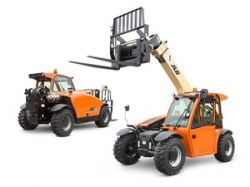
Forklift-5k Telehandler Rental
- Model
- G5-18A
- Weight
- 0.000
Request a quote for current pricing & availability.
Genuine OEMShips nationwideExpert support
Forklift-5k Telehandler
JLG G5-18A Compact Forklift Telehandler
Breakout Force 8900 lb / 4036.97 kg
Drawbar Pull 8700 lb / 3946.25 kg
Lift Capacity at Full Height 4400 lb / 1995.81 kg
Lift Capacity at Max Reach 1850 lb / 839.15 kg
Load Center 2 ft / 0.61 m
Maximum Lift Capacity 5500 lb / 2494.76 kg
Maximum Lift Height 18 ft 4 in. / 5.59 m
Maximum Reach 10 ft 11 in. / 3.33 m
Outriggers or Stabilizers No
Outside Turning Radius 10 ft 7 in. / 3.23 m
Speed - Maximum Crowd 2 sec.
Speed - Maximum Dump 2.5 sec.
Speed - Maximum Lift 6.8 sec.
Speed - Maximum Lower 4.6 sec.
Speed - Maximum Telescope In 3.8 sec.
Speed - Maximum Telescope Out 6.7 sec.
Speed - Maximum Travel 15 mph / 24.14 km/h
Towing Capacity 6600 lb / 2993.71 kg
Ground Clearance 11 in. / 0.27 m
Machine Height 6 ft 4 in. / 1.92 m
Machine Length 10 ft 9 in. / 3.28 m
Machine Length (Forks) 12 ft 6 in. / 3.82 m
Machine Width 6 ft / 1.82 m
Tire Size 12x16.5 Pneu
Wheelbase 7 ft 6 in. / 2.29 m
Capacity - Coolant 3.5 gal. / 13.25 L
Capacity - Engine Oil 9.1 gal. / 34.45 L
Capacity - Fuel Tank 24 gal. / 90.85 L
Engine Horsepower 74 hp / 55.20 kW
Engine Manufacturer Deutz
Engine Model TD 2.9L L4 T4F
Maximum Engine RPM 1800 rpm
Axle-Front High Bias, Limited Slip
Axle-Rear Planetary
Capacity - Hydraulic Reservoir 16 gal. / 60.57 L
Function Pump Type Gear
Hydraulic System Flow 19.1 gal/min. / 72.29 L/Min
Hydraulic System Pressure 3500 psi / 245.11 Kg/cm2
Operating Vehicle Weight 11000 lb / 4989.52 kg
Service Brake Type Wet Multi-Disc
Transmission - Nr Forward Gears Standard 1
Transmission - Nr Reverse Gears 1
Transmission Type Hydrostatic
Safety Information
Introduction
A forklift is a powerful tool that allows one person to precisely lift and place large heavy loads with little effort. Using a tool such as a forklift, cart or hand truck instead of lifting and carrying items by hand can reduce the risk that you will suffer a back injury.
However, there is great risk of injury or death when a forklift operator:
Has not been trained in the principles of physics that allows a forklift to lift heavy loads,
Is not familiar with how a particular forklift operates,
Operates the forklift carelessly, or
Uses a forklift that is not safe due to malfunctioning or missing parts.
Every year nearly 100 workers are killed and 20,000 are seriously injured in forklift mishaps. According to the National Traumatic Occupational Fatalities (NTOF) Surveillance System, 1,530 workers died from forklift related accidents between 1980 and 2001. The top four types of incidents as a percent of the total forklift related deaths are:
Types of Forklifts
A forklift is a type of "powered industrial truck." Like other powered industrial trucks, its purpose is to move, carry, push, pull, and lift a material load then stack it or place it in a storage rack (tier). Forklifts come in many sizes and capacities. They can be powered by batteries, propane, gasoline or diesel fuel. Some are designed to be used in a hazardous location or atmosphere where an ordinary forklift might cause a fire or explosion.
Powered industrial trucks are classified into seven types based on their characteristics. The seven types of forklifts are:
Class 1—Electric Motor, Rider, Counter-Balanced Trucks (solid and pneumatic tires).
Class 2—Electric Motor Narrow Aisle Trucks (solid tires).
Class 3—Electric Motor Hand Trucks or Hand/Rider Trucks (solid tires).
Class 4—Internal Combustion Engine Trucks (solid tires).
Class 5—Internal Combustion Engine Trucks (pneumatic tires).
Class 6—Electric and Internal Combustion Engine Tractors (solid and pneumatic tires). There are no forklifts in this class.
Class 7—Rough Terrain Forklift Trucks (pneumatic tires).
Safely Using a Forklift
Failure to check that the forklift is operating properly can lead to an accident
Pre-use inspection
The forklift must be checked for defects daily — usually by the operator before beginning a shift. Even if you operate a forklift safely, a defect can cause or contribute to a serious accident. Some things to look for are:
Is the horn working? Sound the horn at intersections and wherever vision is obstructed.
Are there hydraulic leaks in the mast or elsewhere? These could cause slipping hazards or lead to hydraulic failure.
Are fuel connections tight and battery terminals covered? Dropping a piece of metal across battery terminals can cause an explosion.
Is there a lot of lint, grease, oil or other material on the forklift that could catch on fire?
Do sparks or flames come out from the exhaust system?
Does the engine show signs of overheating?
Are tires at proper pressure and free of damage? A tire with low pressure or a tire failure can cause a forklift to tip or fall when a load is high.
Do all controls such as lift, lower, and tilt work smoothly? Are they labeled?
Is there any deformation or cracks in the forks, mast, overhead guard, or backrest?
Are lights operating if used at night or in dark locations?
Is steering responsive? A lot of play or hard steering will reduce your control.
Do brakes stop smoothly and reliably? Sudden stops can cause tipping.
Does the parking brake hold the forklift on an incline?
Are seat belts (if equipped) working and accessible?
Is the load capacity plate readable?
Any defects that would affect safety must be corrected before the forklift is returned to service. Appendix A is a sample operator pre-use inspection checklist.
Surface Condition
The surface a forklift operates on can cause serious safety problems. Loose objects, bumps, or depressions can cause you to lose control of steering, bring you to a sudden unplanned stop or cause you to drop your load. A soft dirt surface can cause a wheel to sink and destabilize an elevated load and the forklift.
Any surface a forklift drives on must be able to support the forklift and its load with a safety factor of four. If a 7,000 pound forklift is carrying a 3,000 pound load then the floor must be able to support 40,000 pounds. Remember that nearly the full weight of the load plus a part of the weight of the forklift may be centered near a single wheel. Wet, oily or icy surfaces should be avoided. Clean them up as soon as possible.
Traveling
The basic rule for traveling is that you maintain control of your forklift at all times. Other rules include:
Operate a forklift only while in the seat or operator’s station. Never start it or operate the controls while standing beside the forklift.
Never allow passengers unless the forklift was designed for a passenger.
Do not put any part of your body between the uprights of the mast or when traveling, outside of the forklift frame.
Always look in the direction of travel and keep a clear view of the travel path. Travel in reverse if the load blocks your view.
Always observe posted speed limits at your workplace. A forklift should not be driven faster than a quick walking pace.
Keep a distance of at least three forklift lengths between you and any forklift traveling in front of you.
Do not pass a forklift traveling in the same direction if it is at a blind spot, intersection or other dangerous location.
Never drive a forklift up to anyone in front of a bench or other fixed object.
Never allow anyone to walk or stand under the elevated forks – even if the forks are not carrying a load.
Check that there is adequate clearance under beams, lights, sprinklers, and pipes for the forklift and load to pass.
Never engage in stunt driving or horseplay.
Driving onto trucks, trailers, and railroad cars
Failure to secure the truck or trailer with blocks can cause the trailer to move resulting in the forklift falling between the trailer and the dock.
Forklifts are often driven onto trucks, trailers, or railroad cars over a dock board (also known as a bridge plate) at loading docks. If the truck, trailer or car is not secured to the dock or otherwise chocked, it can move over time.
The dock board can then fall between the trailer and the dock as the forklift crosses it.
You can secure wheel chocks with chain at each loading dock bay and tell truck drivers that they must place them in front of the rear wheels. Another way of securing the trailer is to use a vehicle restraint system mounted to the dock that clamps onto a bar below the trailer as it backs into place. This system will signal when the restraint is engaged or if there is a problem.
The pavement at some loading docks slopes downhill toward the loading dock. This is not a substitute for chocking wheels. Sometimes a trailer is left at a loading dock without the tractor attached. Use trailer jacks to prevent the trailer from up-ending when a forklift drives to the front of the trailer to load or unload.
An unsecured dock plate can move over time resulting in a sudden stop of the forklift and loss of the load as the wheels lodge in the space between the dock and the truck bed.
A portable dock board must be secured in place to prevent it from moving. Some boards have pins that are inserted into the sides and project below the board. This prevents the board from moving toward the dock or toward the trailer. To prevent crushed fingers and make for safe handling, a portable dock board must also have handholds or lugs that allow the forklift to pick it up.
Keep a safe distance from the edge of a loading dock or a ramp. The edge must be painted yellow or with alternating yellow and black diagonal stripes to warn of both the fall hazard and the potential to be crushed by a trailer backing into the dock. Some loading docks have a bull rail that prevents a wheel from slipping off the sides of ramps or edges of the dock where a forklift would not have to cross to enter a trailer.
Any part of the dock edge that is four feet or more above the adjacent surface must have a standard guardrail. Removable rails (such as chain rails) and posts can be used at the place where trucks or trailers will be loaded.
Loading and unloading the forklift
Check the load before you pick it up.
Block
The most common.The upper level may be unstable if not encircled with wire or strapping Brick- Containers are interlocked by turning each level 90 degrees
Pinwheel
Used where brick pattern is unstable.
Irregular Stacking Patterns
Wood strips, plywood or heavy cardboard between layers can help stabilize castings, bags, and other irregular shapes.
Is it stable or will parts slide or fall during transit? Secure it as necessary. The illustrations below show some common pallet stacking patterns.
Do the dimensions and weight of the load fall within the capacity rating of the forklift at the highest elevation and extension you will handle the load? If not, can you break the load into smaller parts?
When you pick up the load:
Move squarely into position in front of the load.
Position the forks wide apart to keep the load balanced.
Drive the forks fully under the load.
Tilt the mast backward slightly to stabilize the load and lift. Check the destination before you place the load.
Is the destination flat and stable — or, will the load rock, tilt or lean?
Never place heavy loads on top of light loads.
Observe maximum stacking quantities and orientation if printed on cartons.
Do you know the load bearing capacity of your rack or storage loft destination?
Are rack legs or support members bent or disconnected? The load bearing capacity of a damaged rack is unknown! Wait until the damaged component has been replaced before loading.
Are racks arranged back to back with a stock behind where you will place the load? Someone may need to be in the next aisle to control access while you place the load.
Are wooden stringers or decking laid between front and rear rack beams in good condition?
If you are stacking, are other pallets in the stack in good condition and capable of supporting the load in addition to what they are already supporting?
When you place the load at its destination:
Move squarely into position in front of the rack or stack where the load will be placed.
When ready to place the load, tilt the mast to level. Only tilt forward when the load is over the spot where it will be placed.
Lower the forks and back away.
Visually verify that the load is stable.
Leaving a forklift unattended
A forklift is considered to be unattended when it is not in view of the operator or if it is in view, the operator is 25 feet or more away. If you leave a forklift unattended, lower the forks to the ground. Set the controls to neutral, turn off the power, and set the brakes. If the forklift is on an incline, block the wheels.
If you dismount a forklift and stay within 25 feet, you must at least lower the forks to the ground, set the controls to neutral and set the brakes.
Lifting or lowering a person on forks or a pallet can result in a fall injury or fingers caught in moving parts of the mast.
Lifting and lowering people
Never allow anyone to be lifted while standing on the forks or on a pallet lifted by the forks! If you want to use a forklift to raise an employee to an elevated position, use a platform or structure specifically built for this purpose that meets these conditions:
The platform must have standard guardrails which include a top rail 36” to 42” above the platform (39” to 45” on a construction site), midrail and toeboard. It must also prevent contact with chains and shear points on the mast. See the illustration for an example.
Forklift work platform has standard guardrails and a screen to prevent contact with moving parts of the mast. A chain secures the platform to the mast.
ever stand on the forks or a pallet to work at an elevated level.
The platform must be securely attached to the forks such as by a clamp or chain.
Check with the forklift manufacturer to verify that the hydraulic system will not allow the lift mechanism to drop faster than 135 feet per minute in the event of a system failure. Identify the forklift as approved for use with the platform.
Lock or secure the tilt control to prevent the boom from tilting.
A forklift operator must be at the normal operating position when lifting and lowering the platform. The operator must be near the forklift while a worker is elevated.
Except to inch or maneuver at low speeds, do not move the forklift between two points when a worker is on the platform.
Fueling/charging
These practices are designed to prevent explosion of flammable vapors due to spark or collision with unprotected fuel tanks.
When refueling or charging batteries, observe the following precautions:
Do not smoke or allow any open flames or spark /arc generating equipment in the refueling / charging area.
Make sure there is adequate ventilation to disburse fumes.
Make sure there is a fire extinguisher nearby.
Make sure there is a barrier that protects the pump or charger against vehicle damage.
Liquid Petroleum Gas (LPG) forklifts
LPG gas is very cold. Wear gloves when changing LPG tanks. Check for leaks before operating.
Gasoline or diesel forklifts
Turn the engine “OFF” and apply the hand brake before gasoline or diesel refueling.
Clean up any spilled fuel before restarting the engine.
Battery operated forklifts
When charging batteries, keep the battery vent caps in place to prevent electrolyte spray. (Check that the vent caps are not plugged.)
Keep the battery compartment open to dissipate heat.
Keep tools and other metal objects away from the top of the battery to prevent an arc or explosion due to short circuited terminals.
When adding fluid to the battery, wear safety glasses and a face shield for protection against electrolyte splash or spray.
Battery charging areas must have a way to flush and neutralize spilled electrolyte.
Do not attempt to remove a battery from the forklift unless you have been trained and the charging station is equipped with a hoist designed for this purpose.
If you do any service to a battery beyond routine charging the employer must supply an eyewash that can be reached within 10 seconds and that is capable of providing .4 gallons of water per minute for 15 minutes.
Carbon monoxide hazard
Internal combustion engines produce carbon monoxide. This gas can rapidly build up in any indoor area. People can be overcome without even realizing they are being exposed. Confusion, headache, dizziness, fatigue, and weakness may set in too quickly for victims to save themselves. Carbon monoxide poisoning can cause permanent brain damage, including changes in personality and memory. Once inhaled, carbon monoxide decreases the ability of the blood to carry oxygen to the brain and other vital organs. Even low levels of carbon monoxide can set off chest pains and heart attacks in people with coronary artery disease.
Gasoline powered forklifts should not be used indoors. Propane forklifts also produce carbon monoxide and must be regularly inspected and maintained. If you are concerned about the exposure level in an enclosed area where a forklift operates, contact a qualified industrial hygienist to make measurements and recommendations to improve ventilation.
Operating a forklift in an environment where chemicals or other substances are present can be hazardous. Use only forklifts that are acceptable for operations under those conditions.
To select the appropriate forklift, you must know the type of location (Class), the name of the chemical or substance and how likely it is that the hazardous condition would be present (Division).
Terms
A Class I location contains flammable gases or vapors.
A Class II location contains combustible dust.
A Class III location contains easily ignited fibers.
An Unclassified location is a general storage, commercial or industrial location without the hazard conditions described above.
A Division I location has a high potential for the hazard to be present.
A Division II location has a lower potential for the hazard to develop.
Out of Service and Required Check Intervals
Some employers keep records of these daily checks. If a forklift is found unsafe then it must be removed from service until repaired by an authorized person.
In addition, the forklift owner’s manual will have routine checks and preventive maintenance tasks that must be done by a skilled maintenance person to keep the forklift in safe operating condition. Keep a record of this maintenance as well as any repairs that are made.
Do not alter or eliminate any forklift parts or add any accessories such as additional counterweights or lifting attachments unless approved by the manufacturer in writing. Make any necessary changes to the load capacity plate and operating instructions.
- JLG Telehandler Attachment Guide
- JLG G5-18A Compact Telehandler Brochure
- JLG G5-18A Forklift Telehandler Specification
- JLG G5-18A Telehandler Illustrated Parts Manual SN 0160091004 to present including 0160088263 0160088264 excluding 0160091013 thru 0160091021 PN 31211319 Rev-B 01-18-2019
- JLG G5-18A 2505 Telehandler Parts Manual Prior to SN 0160053000 excluding 0160051045 0160051047 0160051049 0160051194 and 0160051359 PN 31200360 Rev-N 10-23-2018
- JLG G5-18A 2505H Agrovector 25.5 Telehandler Illustrated Parts Manual SN 0160053000 to present PN 31200725 Rev-N 07-17-2018
- JLG G5-18A 2505H Agrovector 25.5 Telehandler Engine Parts Manual SN 0160053000 and after TD 2.9 L4 Engine 1001136095 and 1001139668 PN 31200936 09-20-2013
Related parts
No image
JLG
1001305317 KIT,BOOM PROP G5-18A Genuine JLG OEM Replacement Part
PN: 1001305317
$1025.73
No image
JLG
3122310900 JLG MNL,SERV G5-18A_EN_PVC2405 Genuine OEM JLG
PN: 3122310900
$87.50
No image
JLG
3122310800 JLG MNL,OPS_ G5-18A_EN_PVC2405 Genuine OEM JLG
PN: 3122310800
$50.00
No image
JLG
1001320558 JLG LOAD,CHART G5-18A UNIV QS PAGE Genuine OEM JLG
PN: 1001320558
$40.96
No image
JLG
1001319901 JLG LOAD,CHART G5-18A PAGE 15 Genuine OEM JLG
PN: 1001319901
$40.96
No image
JLG
31211364 JLG MNL, G5-18A PARTS Genuine OEM JLG
PN: 31211364
$87.50
No image
JLG
31211363 JLG MANUAL,SER,G5-18A_ENGLISH Genuine OEM JLG
PN: 31211363
$87.50
No image
JLG
1001160648 JLG KIT(SERVICE),G5-18A HOOD
PN: 1001160648
$6198.71
Top selling JLG products
JLG
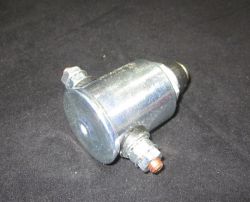
71205 JLG PUMP, MOTOR SWITCH
PN: 71205
$136.47
No image
JLG
27604 JLG BUSHING, FLANGED-SPRING
PN: 27604
$2.88
No image
JLG
27605 JLG SLEEVE SPRING Genuine JLG Equipment Parts
PN: 27605
$18.70
No image
JLG
1319726 JLG FILTER TRANSMISSION
PN: 1319726
$70.00
No image
JLG
80276 JLG WASHER, SPLIT LOCK-Z, 7/8
PN: 80276
$2.49
No image
JLG
28307 JLG TUBE, PIVOT SLEEVE
PN: 28307
$70.68
No image
JLG
1001098226 JLG BUSHING SPRING TUBE Genuine JLG Equipment Parts
PN: 1001098226
$52.50
No image
JLG
70114 JLG BEARING, BALL, SEALED (460/660
PN: 70114
$53.20
No image
JLG
1001098040 JLG SPRING,3 LEAF
PN: 1001098040
$134.46
No image
JLG
1560010 JLG CONDUIT, .457 " IDX.630" OD
PN: 1560010
$2.87
No image
JLG
8160419 JLG BOOT DUST
PN: 8160419
$46.00
No image
JLG
0642028 SCR CAP HH 5,.625-11X3.500
PN: 0642028
$1.92
JLG service & parts manuals
- JLG E18MCL Drivable Vertical Lift
- JLG R1932i Electric Scissor Lift
- JLG ES1932 ES1932i Scissor Lift
- JLG 38AM Vertical Mast Lift-Push Around
- Sky Trak - JLG Industries 12054 Forklift Telehandler
- JLG Toucan 32E Vertical Mast Boom Lift
- JLG Toucan 26E Vertical Mast Boom Lift
- JLG Toucan 20E Vertical Mast Boom Lift
- JLG 4069LE Package 4 Scissor Lift
- JLG 3369LE Package 4 Scissor Lift
- JLG FT LiftPod Combo Pack Vertical Lift
- JLG FT140 Vertical Lift
- JLG FT70 Vertical Lift
- JLG 41AM-AC Vertical Lift
- JLG 36AM-AC Vertical Lift
- JLG 30AM-AC Vertical Mast Lift-Push Around
- JLG 25AM-AC Vertical Mast Lift-Push Around
- JLG 20AM-AC Vertical Lift
- JLG 1230ES Mobil Vertical lift
- JLG 20MVL Mobil Vertical Lift